How to squeeze every drop out of your coached tunnel time
By Fleur Jones
So you’ve decided to invest your money and time in some tunnel coaching. Good move.
You’ll be looking forward to:
- Being under the microscope – the tunnel really highlights any issues you have with body position or “noisy” movement.
- Having someone’s full attention on you, watching your every move.
- Trying to work out what they’re actually saying and wanting from you while being blasted with wind at 125mph and knowing that every second ticking by is literally like burning a £20 note.
- Oh, and yes… having fun.
I really, personally, want you to get the most out of your coached session. My mission is to raise the level of sport flying, and I am very certain that smart, intentional coached work is the most efficient way to get us there as a community.
Coaching from an experienced coach you connect with (the connection part is very important) is one of the best ways to maximise your time in freefall, and the winter months are ideal for this. You’ll be amazed at how much you progress with coaching rather than just flying around with your mates or on your own – fun though that is.
Preparing for your first coached session
If it’s your first-ever session, there isn’t too much you can do other than:
- Make sure you’ve completed your online waiver (your coach should help you with access to this).
- Make sure you’re dressed appropriately.
- Arrive in good time.
- Invest in padding – knee pads and elbow pads that fit under your suit can save you from painful bumps and bruises that are really distracting (trust me on this one).
Personally, I don’t like it when my first-timers have done a load of research on Google/YouTube, etc. I find it better to start with a clean slate rather than having to unpick things that have been picked up inappropriately.
It’s also a good idea to do a warm-up and some stretching. Tunnel flying is physically demanding, and a short warm-up can help prevent or minimise injuries and make the day after not quite so bad.
The IBA suggests a fitness programme to help you get the best out of your tunnel time. You can find it online – it’s not exhaustive, but it does include some valuable exercises. You’ll want to pay particular attention to your shoulders and the front of your hips, as well as your arch (obviously).
Once you’ve had your session, if your coach spots any physical weaknesses or areas for improvement, they should be able to suggest some suitable strengthening and stretching exercises specific to your needs.
Coming back for more
If you’re going back after a previous session, there are definitely ways you can get more bang for your buck.
1. Practise at home! It’s free
I cannot emphasise this enough. Lie on the bed to practise legs and arms for turns, slow fall and side-slides.
2. Use video
Get someone to take a photo or video of you, or stick your GoPro on the ceiling so you can see what you’re doing with your body position and your symmetry. I have a little exercise I get my students to do on the floor outside the tunnel, so that they snap instantly into their body position. This builds muscle memory so that if they come out of the plane in a pickle, they can snap back into a decent body position. That’s the sort of thing you can practise at home without burning money.
3. Revisit your previous footage
It seems obvious, but you’d be surprised how many people watch their videos in the exciting immediate aftermath and then file them away, never to be seen again. The best time to review them is the night before, or the day of, your return to the tunnel, so you can refresh your mental models.
4.Watch your coach, not just yourself
One thing I always say to my students is: don’t just watch you in the tunnel video, watch what I’m trying to say to you. In the heat of the moment there’s often too much going on in the tunnel to absorb everything, but if you watch back and see what your coach is trying to say versus what you are actually doing, it will help you a lot to understand more of what is required.
Also, each coach has their own shorthand and gestures in the tunnel. A good coach will explain these beforehand, but often students forget this once the fans are on. The quicker you can get to grips with your coach’s shorthand, the quicker you’ll be able to understand and learn.
5. Ask for notes
A good coach will do this for you. We’re busy people, sure, but if notes will help you, we’re almost always happy to write them up.
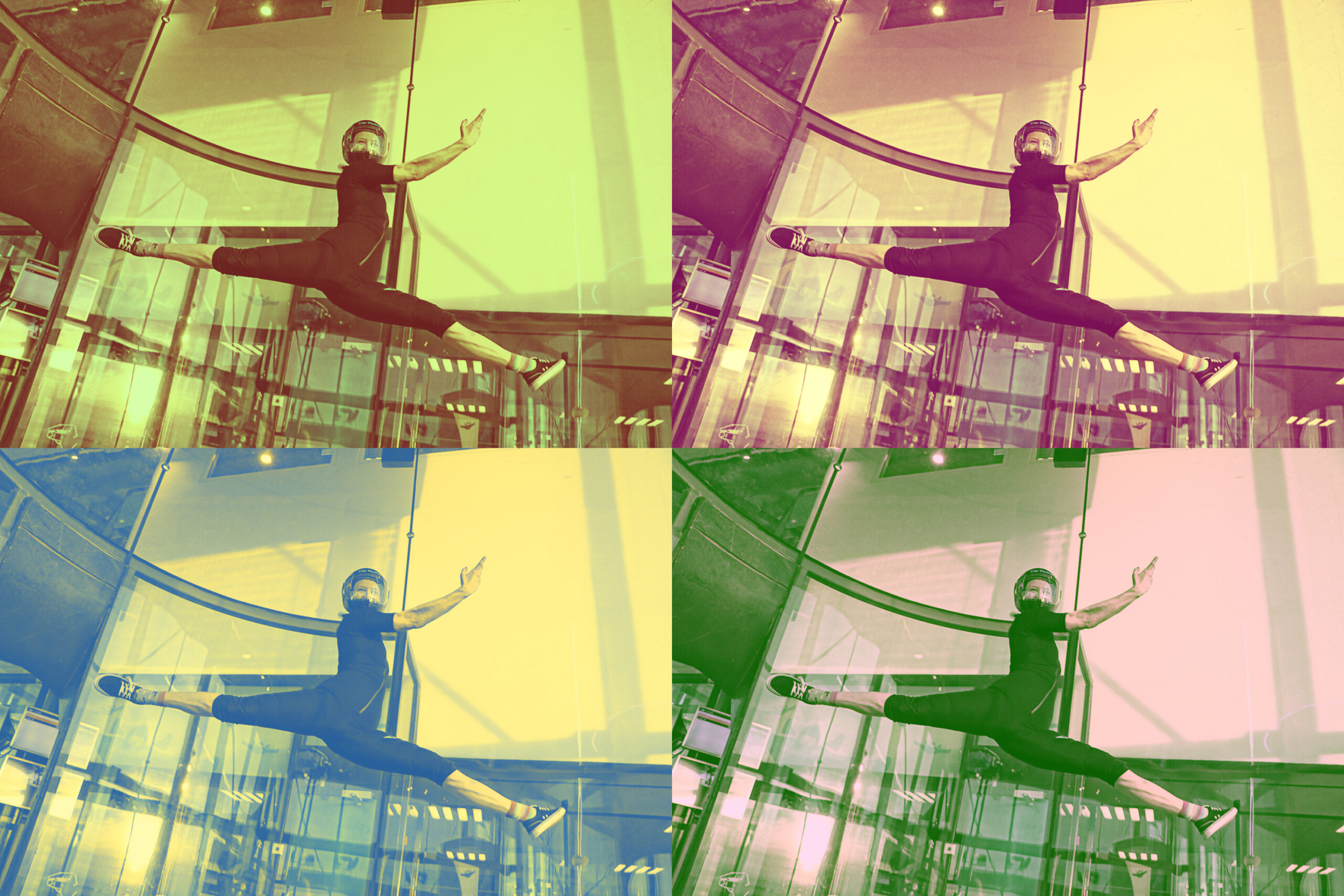
I asked a few of my students, plus experienced flyers, what they do to prepare before their coached session. Here’s what they shared:
AAA flyer, Tom
“I check any notes, watch videos of either myself or another top team, visualise the dives if they’re given in advance, think about transitions and how I feel when I’m flying them, and the timing and positioning of them. I also make sure I’m well rested, given it’s expensive, and ensure I’m mentally in the right space – arriving early enough to sort things out and not be in a rush.”
AFF student, David
“My tunnel training starts long before I step inside – I prepare my body with movement and my mind with focus. The right mindset turns every second of flight into progress. Body ready, mind steady – that’s how I train for the tunnel. Afterwards, I review every video, analysing where my arms, feet, and that all-important arch could be better. It’s a full cycle of preparation, awareness, review and improvement.”
Pre-AFF student, George
“How I get prepared to get the best out of my tunnel sessions is by making sure I’m hydrated and have eaten before I go, giving me the energy to do my best when flying around. I also work out down at the gym with my PT; we heavily focus on strengthening my body, which has had a huge impact on my flying in the tunnel. I’m getting stronger every time I go into the tunnel.
I also do a lot of stretching pre-tunnel, which helps my body a lot and means I can move more efficiently – especially when I’m doing side-slides, for example. I always have a briefing with my coach about what we’re going to do in the tunnel, going through each movement slowly and making sure I’ve fully understood what I’m doing until I feel confident enough to perform those flying skills.”
About the Author:
Women’s World Record Holder and British Skydiving Ambassador Fleur Jones is an MA, Dip RBS (Teacher’s Training Course), FISTD (Examiner) ARAD and a Certified Dance Educator. She holds an AFFI and IBA FS Tunnel Coach rating. She is sponsored by Sun Path, Vertex, Cookie Helmets and Alti-2 Europe. Find her on Facebook, Instagram and YouTube.