Tonfly’s new VID1
If you spend much time around camera helmets, you’ll know there’s always a compromise lurking: protection vs cutaway, stability vs snag profile, comfort vs camera real estate. Tonfly’s new VID1 is a smart attempt to square that circle for jumpers who film regularly. It borrows the protective architecture from Tonfly’s impact-rated ICE lineage, adds a purposeful cutaway chinstrap, and builds the shell and liner around the realities of mounting modern light action cameras. In other words: it’s a purpose-built camera lid that aims to be quiet, stable and – when things go pear-shaped – gone.
What it is
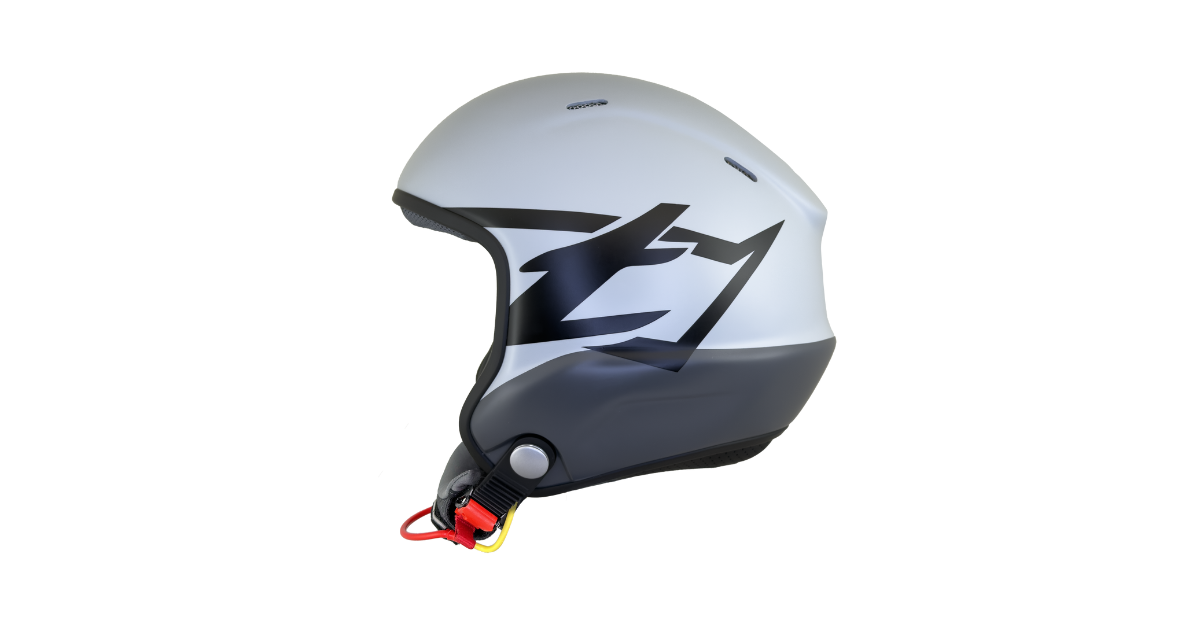
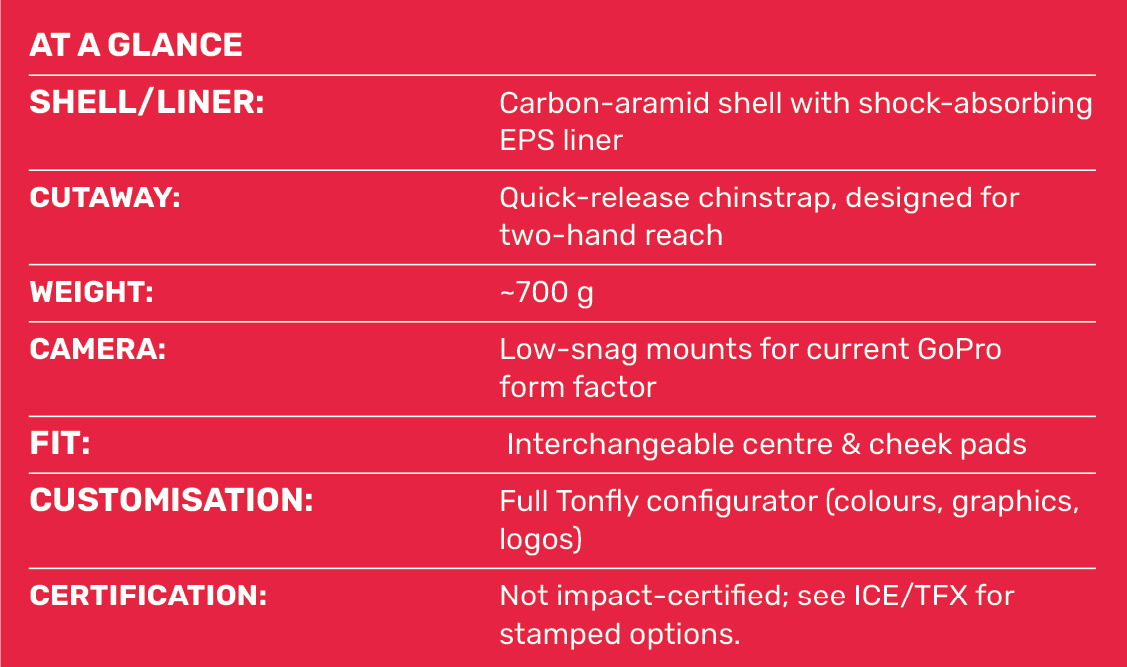
The VID1 is an open-face camera helmet with a carbon-aramid (think carbon fibre plus aramid fibres) shell and a shock-absorbing EPS liner. The combination aims to reduce weight while improving resistance to impact and penetration compared with typical ABS shells; Tonfly also calls out the material’s longevity (carbon/aramid isn’t as susceptible to atmospheric degradation as ABS). The complete lid comes in around 700 grams, which is light for a camera-capable build with proper lining and pads.
Tonfly positions the VID1 as “based on” the ICE platform, but with three essential differences: a quick-release (cutaway) chinstrap, solid camera real estate… and the notable absence of an impact certification. We’ll come back to that last point – it’s important.
Fit and stability
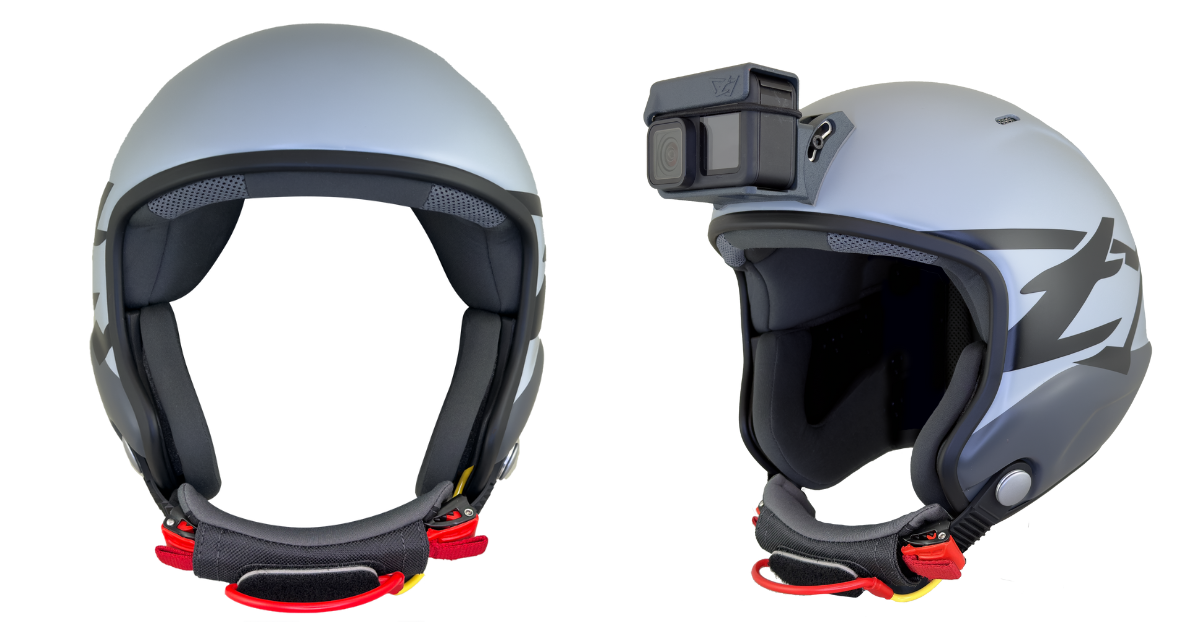
Inside, the VID1 uses an upgraded liner system with interchangeable centre and cheek pads to dial in the fit. The goal is twofold: to keep the helmet planted when you turn your head quickly in the door (or track through burble), and to keep the acoustic environment calm enough to hear audibles and teammates. Tonfly describes the VID1 as “the most stable and comfortable helmet in its range to date,” with noticeable noise reduction compared with its camera-focused predecessors.
If you’ve ever wrestled with a camera lid that shuffles on your head the moment you look to the horizon, you’ll appreciate the attention to the chinstrap. The VID1’s quick-release strap is engineered to be both snug and reachable; Tonfly’s set-up video and dealer pages reinforce that the cutaway is integral to the design, not an add-on afterthought.
Camera-first details
The VID1 is built to host modern action cameras cleanly. Tonfly’s low-profile, snag-reduced mounting eco-system slots straight onto the crown; dealers list compatibility spanning GoPro Hero 9 through 13 (and the corresponding form factor). The idea, as ever, is to minimise snag points without sacrificing camera angle options. If you’ve flown older Tonfly tops with roller mounts or plates, the VID1 will feel familiar – just tidier.
Customisation is very Tonfly: that is to say, you can choose colours, finishes, logos and graphics through the configurator, and save a build for an authorised dealer to order. UK stockists are already listing the model, which should simplify try-ons and delivery this side of the Channel.
The certification question
Here’s the crucial bit to understand before you buy. Unlike Tonfly’s ICE and TFX models, the VID1 is not impact-certified under standards such as EN966 (and France’s XPS 72 600).
Why?
Because current airborne-sports impact certifications don’t play nicely with helmet cutaway systems. The logic of the standard is that if a helmet can be released, the wearer could be left without protection at the moment of impact, so the presence of a cutaway disqualifies certification. Tonfly’s own materials and launch video make this explicit: the VID1 deliberately trades the stamp for a built-in cutaway and camera readiness.
We asked Tonfly designer (and long-time freefly competitor) Filippo Fabbi – this helmet’s creator – about that decision. He stressed that the VID1’s protective architecture mirrors the ICE – shell, liner and general structure – only the certification stamp is absent because of the cutaway. The aim, he says, is clear: provide a protective, camera-capable option for jumpers who must (by national rules) or choose to have a cutaway on any helmet that carries a camera.
Filippo also noted a practical detail that many camera flyers will recognise: in a real entanglement, the chin is the only place you can reliably reach a release with either hand. Putting the handle elsewhere risks it sitting under lines and risers at the crucial moment.
On-head impressions: design intent
Fabbi’s own flying brief for the VID1 was simple: stability first, especially during hard head-movements, then comfort you can wear all day. That lines up with the pad kit, the low-mass shell and the acoustic goals Tonfly quotes. The helmet’s outer geometry is a purposeful evolution of Tonfly’s camera line – sleeker than the old “box-era” lids, with clean transitions around the crown so your mount is the highest-profile feature, not the helmet itself.
Who it’s for
Anyone who wants an open face protective helmet with cutaway system. If you like open face helmets, you should use a protective, certified version – however, if you want (or professionally require) a cutaway system for any reason, a protective-but-not-certified choice handily straddles the gap.
Regular camera flyers (freestyle, FS/angle camera, tandems with outside video) who want a clean way to run a current GoPro with an integrated cutaway.
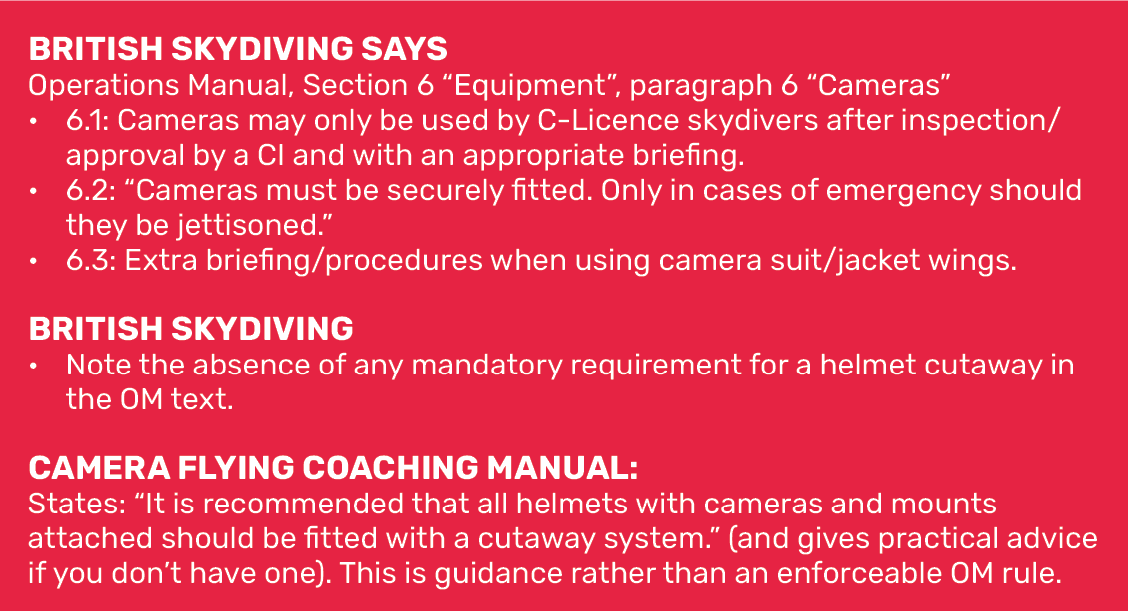
Jumpers under rulesets requiring a cutaway for any helmet carrying a camera – common in several national federations – who still want a protective architecture similar to an impact-rated open-face.
Tunnel flyers who shoot content and value a snug, quiet fit without the faff of a full-face visor.
If you rarely (or never) run a camera and you want a certification stamp, Tonfly’s TFX full face and ICE open face remain the obvious picks; both carry published ratings under EN standards. But neither offers a cutaway-with-camera pairing like the VID1.
I fly with a camera a lot; I want quiet, protective and I need a cutaway
What we liked
- Purpose-built trade-off: a protective shell/liner combo with a designed-in cutaway, instead of grafting a release onto an old lid.
- Fit system: modular centre and cheek pads that actually let you fine-tune pressure, improving both stability and noise.
- Modern camera integration: low-snag mounts for the current GoPro footprint, without extra plates and spacers.
- Weight: ~700 g keeps neck fatigue down on busy camera days.
Things to consider
- No impact certification …and that is by design. With that said: if a stamped standard is a requirement for you, this isn’t your lid (Tonfly’s public materials explicitly note the lack of certification on VID1; the ICE/TFX are the certified models).
- Discipline fit: The VID1 is open-face. If you’re doing high-speed or cold weather work – or just prefer full-face – you’ll need to weigh visor coverage vs the benefits of the cutaway/camera platform.
- Mount choices: As with any camera helmet, the safest mount is the one you train with. Keep the profile tidy, route any tethers sensibly, and practice the cutaway until it’s a reflex.
Verdict
The VID1 reads like an honest answer to a very real use case: “I fly with a camera a lot; I want a protective build that stays put and sounds quiet; and I need a proper cutaway because I’m not interested in rolling the dice in a wrap.” By all accounts, Tonfly has taken the protective bones of a rated open-face and configured them for camera work – accepting the current standards trade-off to give jumpers a reachable, reliable release on the chin. If that describes your flying, the VID1 deserves a spot on your shortlist – and probably on your head for your next content block.
Editor’s note:
At press time (November 2025), several national parachuting associations require a helmet cutaway if you jump a camera, but current airborne-sports impact standards don’t certify helmets that incorporate a release. The VID1 is Tonfly’s attempt to bridge that gap. Always check your dropzone and national rules before you buy.
Reporting informed by an interview with Tonfly’s Filippo Fabbi (designer; freefly competitor and long-time product developer).