How a homegrown SaaS intends to help lift the lifts
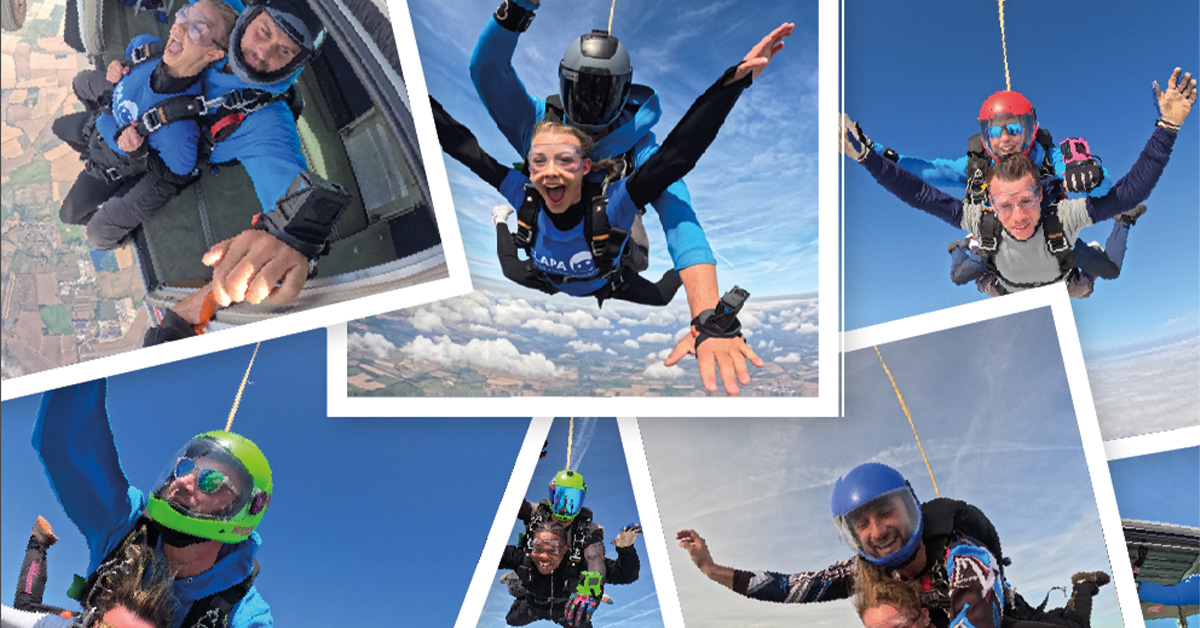
Collage images by Gary Wainwright
On a busy tandem Saturday, the dropzone can often feel like organised chaos. Camera flyers are sprinting from the landing area to the manifest board, swapping rigs, juggling SD cards, trying to remember which smiling face in the last group is “Megan in purple” and whether she paid for “just photos” or “full video with social.” Meanwhile, the office is fielding phone calls, the DZO is watching the fuel bill… and the tandem waiting area just keeps filling back up.
For years, the tools we used to tame that chaos were never really built for us. They were generic video platforms, stretched awkwardly to fit the realities of the skydiving industry. None of them focused on the opportunities to generate additional revenue.
One day, someone – British skydiver Rob Jonson, specifically – decided to fix it (you might know of Rob already: he’s familiar to many jumpers as the mind behind Skydive Designer). To tackle it, Rob started the other way round: first assessing the realities of a tandem operation and then writing the software.
A British answer to a global problem
If you’ve travelled a bit, you’ve probably seen some version of automated tandem video in action. In the late 2010s, Skydive San Diego was using a system where camera flyers dropped their kit onto a clever docking station between loads: charge, upload, auto-edit, green light on, go again. Other DZs have gone down the Shred route – Aussies will know Swoopware. Most of these tools come out of well-funded tech companies in the US, built with theme parks and multi-activity venues in mind.
FreeFallFilms (FFF) is something different: a skydive-specific system, built in Britain by a skydiver-engineer, and now in use at dropzones across the UK, Europe, US and Canada. “We’re told, over and over, that we’re the best thing on the market,” says Jim Bradwell, popular UK load organiser, including of the Formation Load Sequential, who now looks after sales and operations for FFF. “We’ve had plenty of DZs move over from Shred, and some from the San Diego product – despite the fact those companies have millions in tech investment behind them. We’re small, but focused. This is all we do.”
That focus highlights where the product comes from. FFF creator Rob Jonson didn’t start with a business plan. He started with a real dropzone, reacting rapidly to address the real problems they faced in day-to-day operations: back-to-back video loads, mistyped emails, overloaded manifest staff and DZ owners leaving money on the table because the “tandem video system” was being held together with USB cables and raw hope.
“Most support issues are design issues”
Spend two minutes with Rob and you’ll realise he is, unapologetically, an engineer. But he’s an engineer who has spent years watching the way tandems actually run. FreeFallFilms is Rob’s answer to a question most fun jumpers never have to ask: How do you deliver hundreds of high-quality, personalised media packages on a sunny Saturday without grinding the whole operation to a halt?
“The software has to carry the load,” Rob says. “Tandem operations run at full tilt. If a system needs a lot of explaining, it’s not doing enough of the work.”
His core philosophy shows up in the way the interface behaves amidst a hectic day.
If someone gets confused, the interface is in their way. Most questions are answered with a design fix
In practice, that means less “computer says no” and more “of course that’s the next step.”
How the system actually works (on a real DZ day)
At its heart, FreeFallFilms is a capture-to-delivery pipeline tuned specifically for tandem skydiving. The exact set-up varies from DZ to DZ, but the flow looks something like this:
- Capture. Tandem and camera pair go to altitude, do their thing and land, shooting in the formats and camera types the DZ has standardised on.
- Ingest, faffless. Instead of staff disappearing into a back office to manually wrangle files, footage is imported into FFF automatically. The system keeps track of which customer is which, which package they bought and which options they could still be offered.
- Autocut, auto-build. FFF then cuts the footage according to templates designed for skydiving: a full edit, social-media-friendly vertical clips, stills pulled from the best moments and so on. Camera flyers get to leave the busy work to FFF.
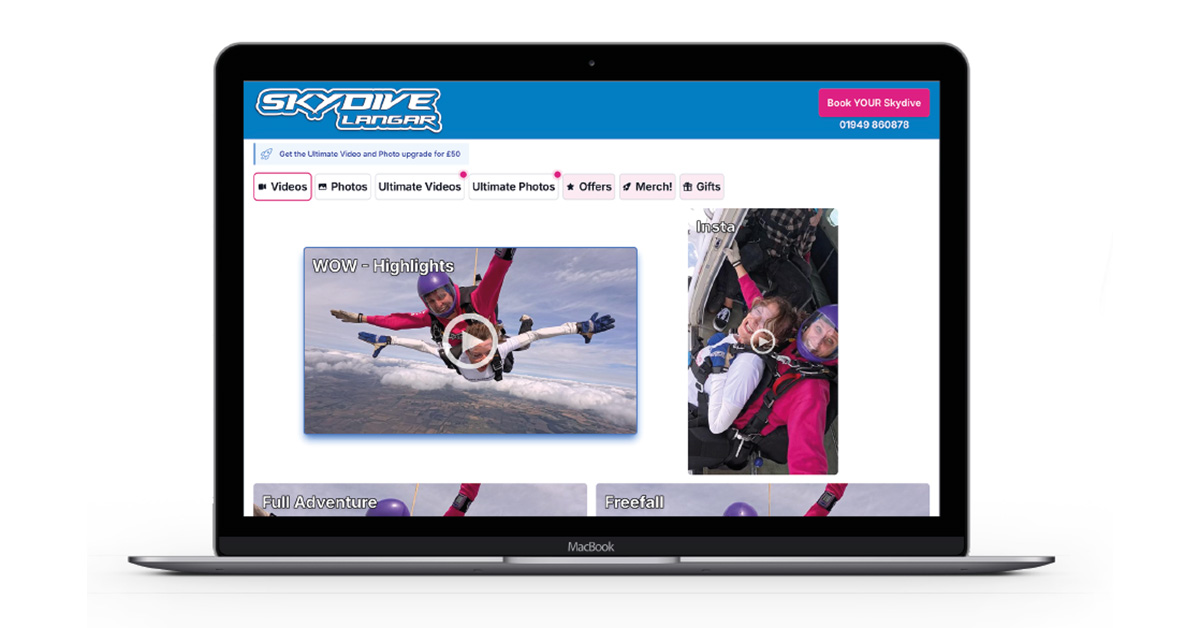
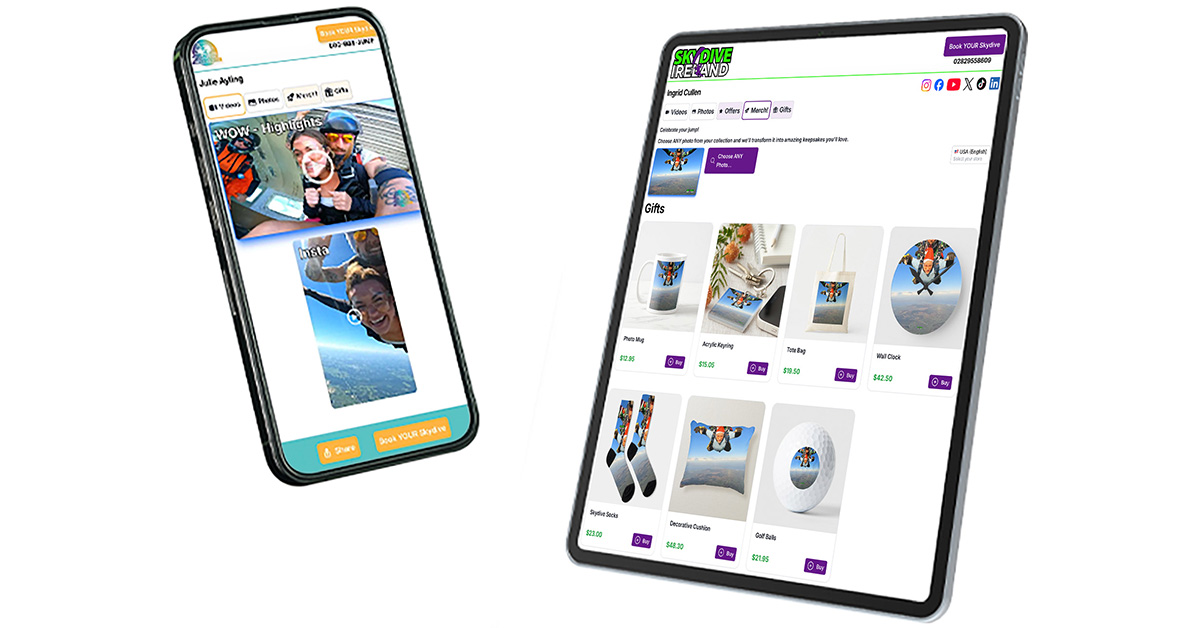
- Instantly share, upsell, repeat. Within minutes of landing, the customer can view their media on their phone – no waiting. It’s all there, instantly viewable, on a DZ-branded landing page. That means that the dropzone can do cool stuff like sell a video to someone who didn’t commit before undertaking their jump; seamlessly add upgrades; offer the raw footage (for influencer-types); and route customers straight to merch that features their images.
The future of tandem media, from our own backyard
British skydiving has exported some serious innovation over the years, from coaching methods to canopy design. FreeFall Films quietly joins that list: a home-grown answer to a problem every busy tandem DZ shares. Media revenue represents one of the few levers that can move the bottom line without adding more lifts.
Jim spends his weeks on the phone to DZ owners and managers worldwide, and the pattern he hears is consistent: tandems subsidise the facilities that we sport jumpers require, media sales support tandem profitability …but most DZs don’t have the time, tech or manpower to optimise that last key piece.
“Once we actually sit down with the right person at a DZ and walk through their numbers, the benefits become obvious,” Jim says. “We’ve got multiple dropzones where, for every pound they pay us, they’re seeing three pounds back in additional revenue. You can’t clearly explain that on a website. You need a proper conversation.”
The upshot of all this is simple: in a sport where margins are thin and weather is fickle, anything that turns chaos into cash without getting in the way of the jumping lifts us all up. Literally. The better the tandem machine runs (and the more revenue it generates), the easier it becomes to justify the aircraft, facilities and staff that make those weekday 8-way dreams possible.