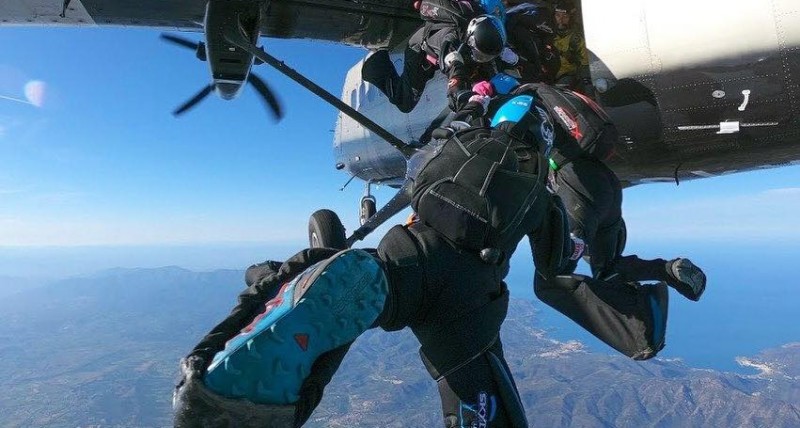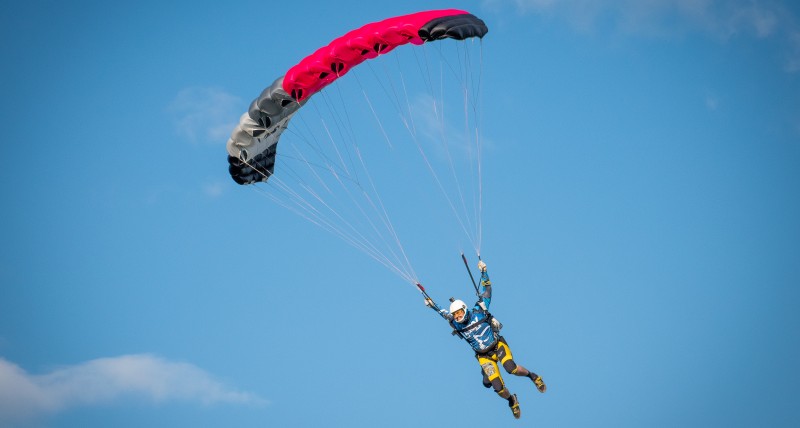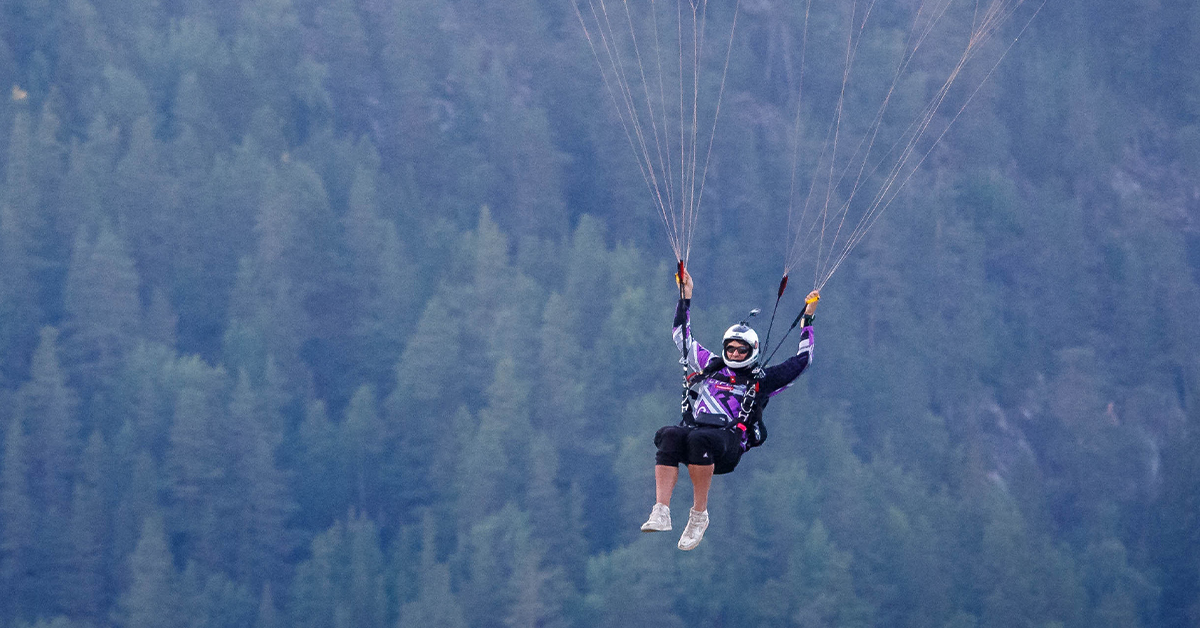
Joel Strickland stops moving for just long enough to answer our questions
Name: Joel Strickland
Birthplace: Hereford
Current home DZ: Don’t have one. I visit many, and by degrees have come to sort of act at home even if I am somewhere new. This can, at first, be confusing for the locals, but I have very strong plot armour because of my job being the CYPRES guy.
Jumps: Dunno, stopped counting years ago. Maybe 3,750.
Cutaways: Five
Sponsorships: At this stage my equipment represents direct colleagues and important friends. The gear I use is, without exception, my bestest firstest choice…
- CYPRES
- LB Altimeters
- Performance Designs
- United Parachute Technologies
- M87 Flywear
- Cookie Helmets
Gear
Main: PD Valkyrie 90
Container: UPT Mutant 306
Reserve: OP126
AAD: CYPRES
Where, when and why did you make your very first jump?
Skydive Byron Bay, Australia, in approximately January 2006. I was there again in 2023 for work and it remains a beautiful spot to jump at. A lot of Aussie places can fly at dawn, and over Cape Byron the rising sun illuminates the tippy top of Mount Warning like a reverse lighthouse. Sometimes you can see whales from the plane, whaling-about off the coast.
Why? I was working my way down a list of conventional 20-something experiences. Swim with dolphins and such. Climb a temple and stare wistfully out across some jungle. Behave questionably in many youth hostels. I wanted to leap out of an aircraft unaided, so I skipped doing a tandem and got a licence. It was good, and the people I was immediately surrounded by enthusiastically represented interesting paths into a complex and rewarding sport.
What are your three favourite things to do when you’re not jumping?
- Traversing liminal space in a mysterious fashion. The hotel breakfast room is where I truly thrive.
- Fighting a constant battle between personal wellbeing and existential dread. Right now this can best be described as Kettlebell Routine vs. Spicy Ramen Noodles.
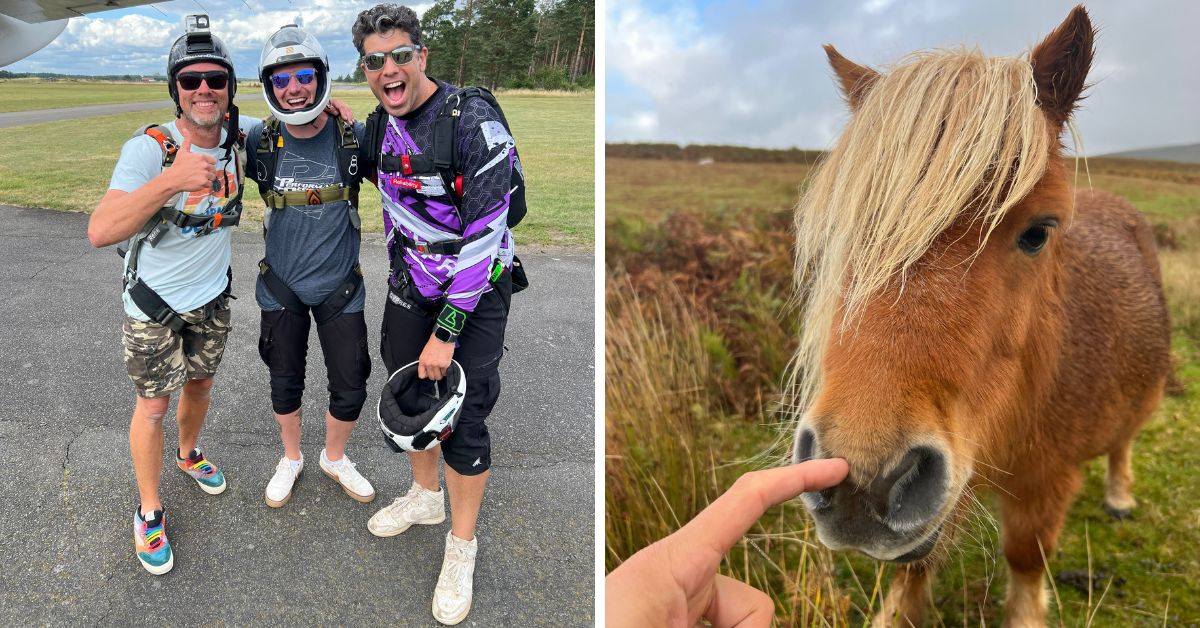
- Making friends with animals. This is generally the result of spending a lot of time doing stuff outside.
What philosophy guides your life?
No matter what anyone has told you or what any of the available information states, always smell the milk first.
What items on your “skydiving CV” are you proudest of?
My role in the industry is made of a thousand small details that add up to what is hopefully a meaningful contribution. CYPRES and LB are both very generous companies who trust me to interact with the skydiving community on their behalf, and I try to honour that. Every time I can help an individual or a dropzone without asking for anything in return is a reminder to be proud that I get to do what I do.
What does it mean to you to be a British skydiver?
It means slowly learning more rhyming slang with which to confound everyone.
What would you like every new skydiver to know?
Successful skydiving is above all things about communication, and information works best when applied in all directions. You don’t have to have the most experience to contribute something useful.
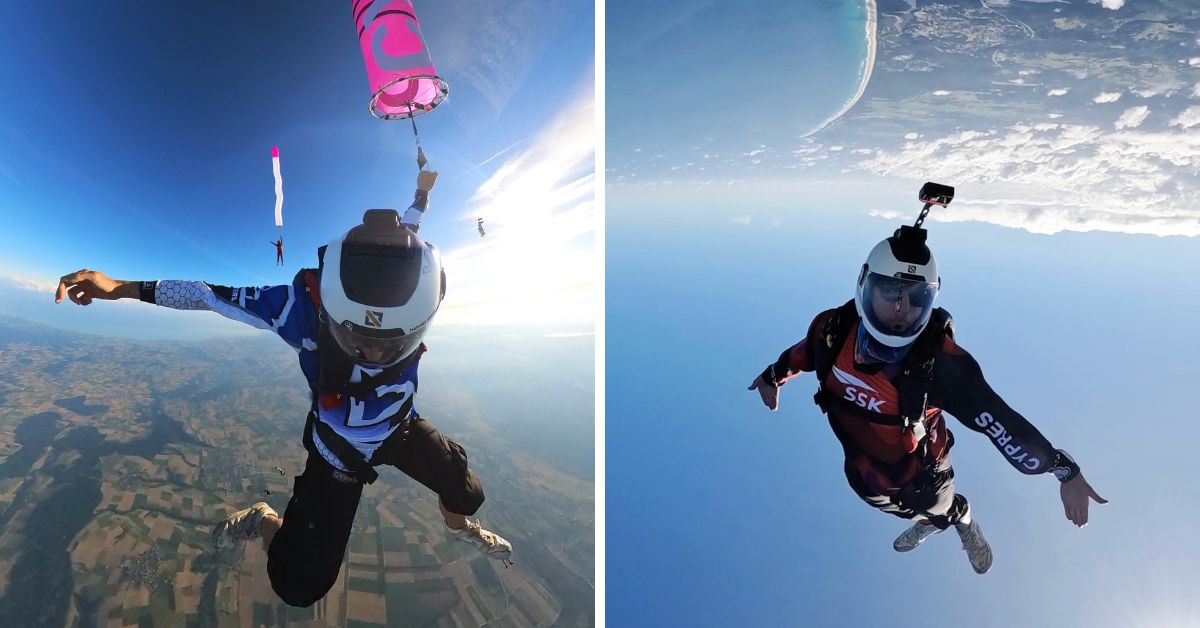
Who have been your mentors in the sport, and what was the most important lesson each of them taught you?
A fun and possibly important thing about skydiving is that you can jump with and learn from people who quite literally invented the thing you are trying to achieve. I have never had a mentor as such, but through the years have witnessed those who have altered the path of progress with even a single action, thereby leading and mentoring individuals, disciplines, communities, or even the entire skydiving world with their contributions. Watching someone create an evolutionary step forward in real time can be a powerful thing, and I could list many moments that created a perceptible butterfly effect on skydiving. Instead, I would encourage others to think of their own examples, and consider what that might mean.
What about the sport would you most like to change, and why?
It would be nice for everyone if things were getting more affordable rather than the other way around. For the most part skydiving has always been a relatively privileged affair, but if it were easier to commit past the first big barriers of buying a rig and getting some useful, real-world experience then everyone would benefit – particularly by how greater numbers across smaller demographics could shape the way people view and engage with the sport. There is progress here and there, but if you go to fancy events with the $800-worth-of-embroidery crew it is easy to wallow in how self-satisfied things can feel. In many places our sport is plenty regressive and can do better.
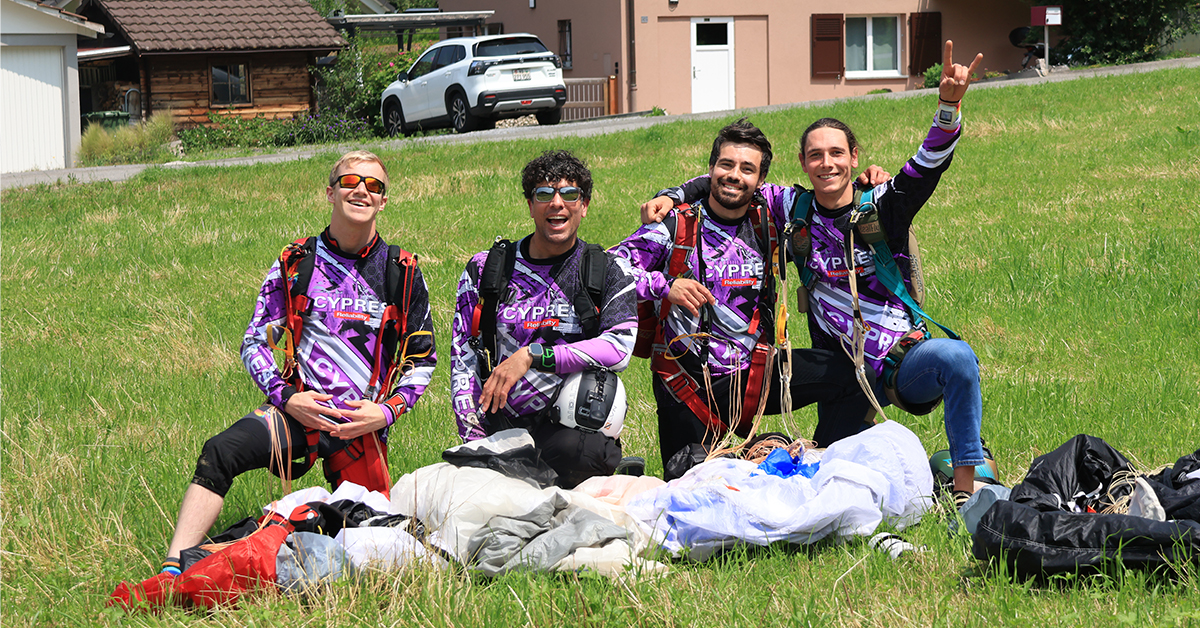
What has been your most challenging moment in the sport, and why?
A notable challenge has been moving on from investing enough time and effort to participate at the highest level of something. To be properly good at a particular discipline you have to go all in, and there is a lot to gain from doing so, but it is not sustainable once you want and need to develop some additional goals. Other reward structures exist in skydiving, but letting go of being at the pointy end of something can be a time of personal investigation.
What’s the next challenge you’ve set for yourself?
I am about to leave for South America to visit some dropzones in a few different countries. Out in the world, I represent CYPRES, and upon return I represent the skydiving communities I have spent time with. One of the most interesting and rewarding parts of this work is existing as a connection point for different parts of the industry. I function as a research tool and channel for communication, which can feel important and gratifying – and also sometimes be challenging to get right.